Why Price Isn't Always The Problem When A Home Doesn't Sell
When a home has been sitting on the market without selling, it's natural to assume it may be over-priced.
And sometimes, price is absolutely the problem.
But price is only one piece of the overall value proposition. Before assuming that a price reduction is the answer, it’s worth asking a different question:
Have buyers actually been shown the best version of the home?
Because price, property and presentation all work together to create a buyer’s perception of value.
Think about two similar homes.
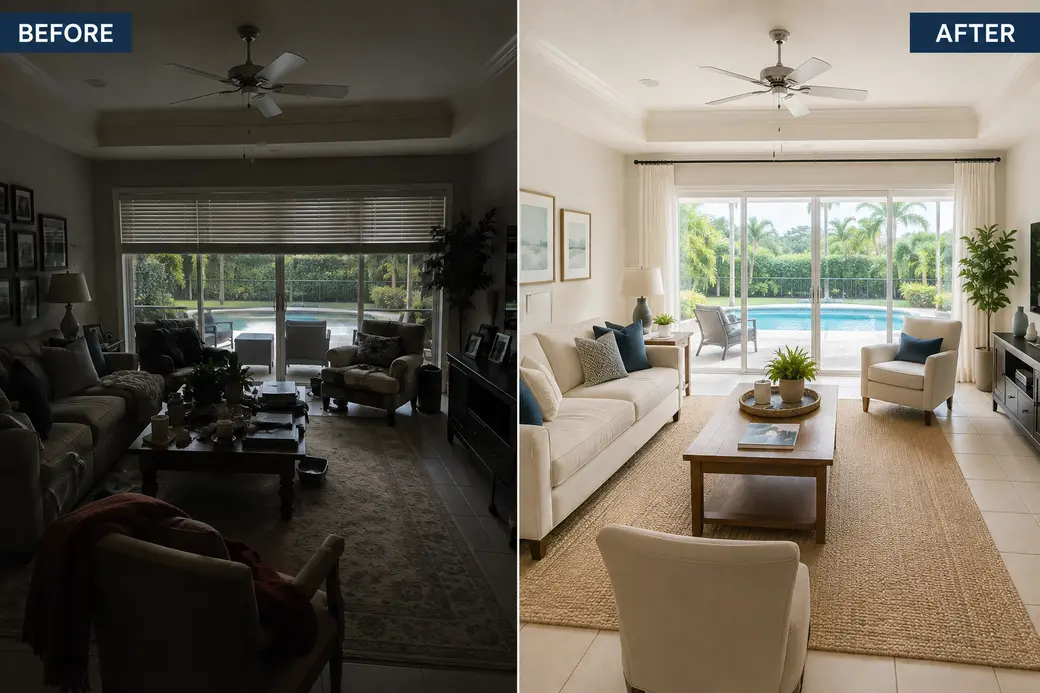
One is bright, clean and welcoming. The counters are clear. The rooms feel spacious. The windows are clean and uncovered, and buyers can see the view. The house smells fresh. Small maintenance projects have been completed and everything feels well cared for.
The other may be just as good — perhaps even better — but it’s dark and dusty. There’s too much furniture. The rooms feel cramped. Family photographs cover most wall. The counters are crowded. There are pool floats stacked on the lanai, unfinished projects in the garage and a chandelier over the dining table that the seller plans to take with them.
Those two homes may have very similar square footage, features and locations. But, to a buyer, they may not feel like they have the same value.
I’ve seen beautiful homes sell for less than they should have because the presentation was sterile, stale, cluttered or just didn't show the property at its best. And I’ve seen relatively ordinary homes command strong prices because they were beautifully maintained, spotlessly clean and presented with care.
Buyers are evaluating much more than a number on a listing.
Clean May Be the Most Underrated Selling Feature. Nothing sells a home quite like clean.
A home doesn’t have to be brand new. It doesn’t need the latest kitchen or the most fashionable flooring. But a meticulously clean, well-maintained home sends an immediate message that the property has been cared for.
Light matters too. Bright often translates, almost subliminally, to clean. Open the blinds. Clean the windows. Let the light in!
They want to understand the view, where the neighbors are, whether there are mature trees outside the windows, what the backyard looks like and how the home relates to its surroundings.
And don't forget smell. Pet odors (like the time the cat pooped right before the open house!), cooking smells, heavy fragrances or mustiness can completely change a buyer's reaction to a house — often before they've consciously worked out why.
The goal isn't to make a home feel artificial. It's to make it feel welcoming.
Let Buyers See What They’re Actually Buying
Decluttering is sometimes misunderstood as removing every sign that human beings live in the house. That's not the point.
Buyers need to be able to see the floor, walls, counters, windows and space — the things they're actually buying.
Floors covered in rugs? Buyers may wonder what's wrong with the floors. A wall filled with family photographs draws attention to your family rather than the room. A kitchen counter covered with appliances makes buyers notice the lack of counter space. Too much furniture can make a perfectly adequate room appear small.
The same applies outside. Put away the pool floats, gardening equipment and seasonal decorations. Finish the half-painted wall. Replace the missing cabinet handle. Deal with the little maintenance jobs you've been meaning to get around to.
They may seem insignificant individually, but collectively they influence how buyers perceive the condition of the property. After all, if you didn't have time to fix the small stuff, what else hasn't been maintained?
And if something isn't staying with the house — perhaps that beautiful chandelier over the dining table — consider replacing it before the home is marketed. There's little benefit in making a fixture part of the property's appeal only to create disappointment or negotiation later when the buyer discovers it isn't included.
If You Present a Property Like a Project, Buyers Will Price It Like One
There is a reason investors are attracted to properties that aren't presented particularly well. They see opportunity.
If a house looks neglected, cluttered or unfinished, an investor may look past those things — but they're generally going to expect the price to compensate them for doing so.
Owner-occupant buyers are often willing to pay more for a home that feels cared for and feels move-in ready.
You wouldn't sell your car without emptying the trunk, removing the coffee cups and running it through a car wash first. Why would you put an asset worth hundreds of thousands of dollars on the market without giving its presentation at least as much thought?
The Listing Has to Present the Home Properly Too
Of course, preparing the physical property is only half the job. Most buyers will see your online listing before they ever tour your house. They may even buy it sight-unseen if out-of-state or overseas.
Dark photography can make a bright home appear gloomy. Poor angles can make rooms look smaller. Closed blinds can hide a beautiful view. A confusing sequence of photographs can make it difficult to understand the layout.
The first photograph matters. So does the second. And the third. Buyers should be able to understand what the home offers, how the spaces connect and what makes the property worth seeing in person.
Floor plans, thoughtful photography, aerials, useful listing copy and deliberate photo sequencing aren't simply marketing extras. They help buyers understand the value of the property they're considering.
So, Is It the Price?
Maybe. If a home is substantially overpriced for its market, no amount of decluttering, cleaning or beautiful photography is going to magically change its value.
But when a home isn't selling, reducing the price shouldn't automatically be the diagnosis. Look at the whole picture.
Price. Property. Presentation.
Before discounting the home, make sure buyers have actually been given the opportunity to see its true value.
Because sometimes the market isn't saying, “This home costs too much.”
Sometimes it's saying, “I don't yet see why it's worth what you're asking.”
Categories
Recent Posts
LEAVE A REPLY